The Empathy Link
Updated: Mar 16
When trying to raise public attention of complex issues, a photograph can go a long way towards engaging an audience and fostering deep connection through visual stories of our shared humanity.

A powerful portrait with a short, well-written caption can break down the barriers of engagement between the viewer and the subject. It can ask questions and it can provide answers. It can also provide a very strong, subconscious pull. I call it The Empathy Link.

Complexity vs Attention
There are so many stories out in the world today, and the ones that get the most attention are often those that are the most simple and dramatic. But they aren't necessarily the most important.
I'm sure that almost every purpose-driven organisation has felt frustration when the issues they are passionately working on seem too complicated, inaccessible or academic for the everyday viewer.
When concentration spans are low and attention is a hard-won commodity, content needs to be eye catching, engaging and compelling.
It's part of the reason that famine, war and the early years of the HIV/AIDS epidemic just couldn't be ignored, because they were so visual, so immediately challenging, and so heartbreaking.
It's a photographers dream to be commissioned to photograph something that is inherently visual - fashion, wildlife and celebrity are all very popular subjects because it's hard to go wrong, everything you need is right there in front of you, you just have to take the picture and you will have something of interest.
But what happens when we need to tell a story that is more subtle, one that does not have a clear visual narrative? How do we engage people with a subjects that demand a concerted effort from them to understand?

The Power of Photography
A single photograph can immediately engage a viewer and motivate them to find out more. The viewer can be drawn into a story that they would never usually have read because of an engaging portrait.
I know this because they write to me to tell me that they were so taken by one of my portraits, that they read the story.
The old saying "a picture paints a thousand words" is a cliche because it is true. In a split second, with minimal effort, the viewer can take on a wealth of information about the subject and the story. And not only that but their subconscious emotions can be stirred; concern can be registered, empathy can build, and motivation to take action can be triggered.

Sidebar - A level playing field
Someone once said to me that I take photographs of "normal people" with the same effort, care and attention that I would if I was to photograph David Beckham.
I agree.
If I was commissioned to photograph a high-level celebrity, I would turn up just me, my camera and lights, the same as I would for anyone else. I would chat to them, make them feel comfortable and then take the time to set up my lights and take the best portrait of them that I could in the situation. This is what I would do for anyone.
When I released The Price of Gold, it was published around the world. The subject matter was a bit dry on the surface, a class action lawsuit for gold miners who were sick from inhaling silica dust. There was nothing visual in the sickness, you could not see it in the miners. But the portraits I took were engaging, colourful and above all professional and high-quality. The sort of effort usually reserved for celebrities, advertising or fashion.
What happens is that the viewers interest is piqued. "Why would a normal looking person in a normal looking house deserve this level of portraiture?" they subconsciously ask themselves.
"Good question. Read on...." is what the photograph replies, and the journey begins.

The Empathy Link
I believe in telling real human stories because, at our very core, we are all connected to each other through our shared humanity. That is what my photography is all about.
I believe that we are all capable of great empathy because of that connection, but I also believe that we have learned to self-preserve in a time of information overload.
It may be the case that images of extreme sickness and poverty are immediately affecting but, by their very nature, they also create distance. The subject matter can be so affronting that in order to self-protect, we file it under "happening to other people". We look away and tell ourselves that we are different, giving ourselves permission not to engage.
My job is to connect. Connect someone who needs to be heard to someone who needs to hear them and to provide an empowering platform for that exchange to happen. And the only way to do that is through empathy.
The Empathy Link is a technique that I have developed to foster connection through my work. It is the purposeful inclusion of elements in a photograph, that subconsciously link people to each other through our shared experience.
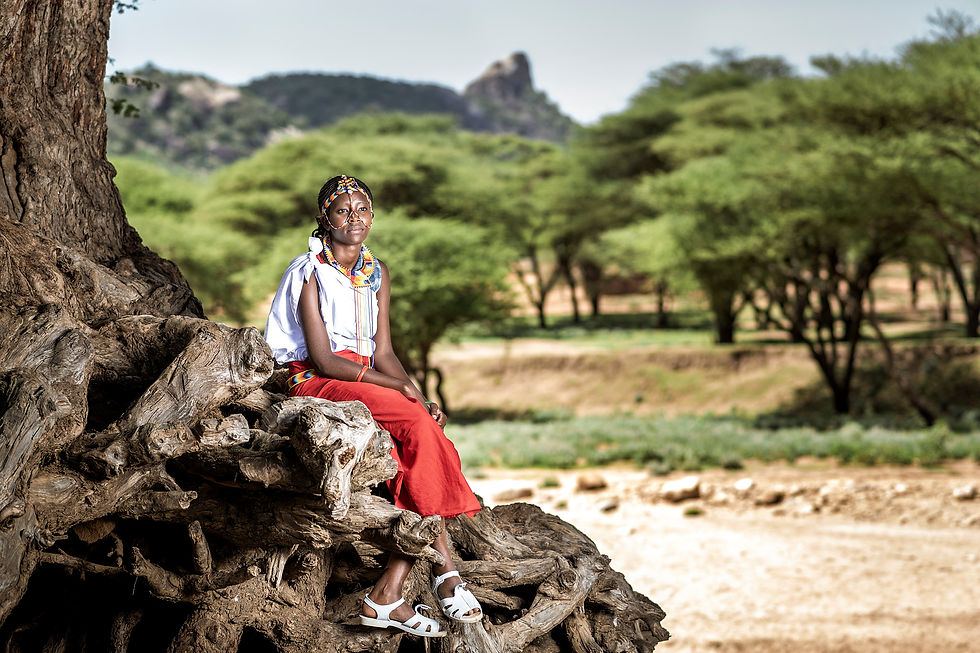
My first empathy link is always the person themselves, that is why I light my subjects. I want them to be fully seen. I want you to connect with them and look into their eyes. But this does not always bring connection, in fact it can sometimes create distance.
We have created so many barriers between us; race, gender, class, nationality, age etc. that the look of the person themselves, despite our shared humanity, can encourage a perception of difference. But empathy lives within our similarities, no matter how small or mundane.
So, in any photographic situation, I also look for the visual elements that can connect us. That may be a kettle, microwave, pet dog, or just a Nike logo on a t-shirt. It doesn't really matter as long as it is something that is familiar to both the view and subject.
Each element breaks the barrier of distance just a little bit and creates a connection that contributed towards empathy. Each minute details is an empathy links; a tiny gateway that lead to a deeper engagement, understanding and connection.

Simplifying The Complex
Once we have engaged the viewer with our dazzling photograph, and invited them to care through our well placed empathy links, we can throw so much more information at them than before. Complicated issues become worth the effort to understand, and academic stats land harder because they are now personal. They are about someone they care about a little bit.
Then we write the story in a way that compliments the images. Accessible, understandable and relevant to the subjects. We add in quotes and anecdotes and, all of a sudden, we have an engaged audience who have gone deeper than they ever would before.
Hit them with a tangible action that they can take to make an impact, and suddenly we have a fully formed campaign.
A beautiful, well lit portrait can grab a strangers attention. But the empathy link can take them from curiosity to compassion. Together they can turn a passer-by into an advocate for change.

Comments